Come along to a friendly, free meetup where you’ll be welcomed for who you are. The venue has level access, disabled toilets, and reasonably priced food and drink.
Stratford station has step free access.
You can take buses 69 or 257 for 1 stop.
You can also walk 5 mins. Just turn left out of the station
You will see what looks like a Stargate! Cross the road there.
Walk past the cinema. Stratford Circus is the big blue building to the left
You have arrived! Bi’s of Colour meet in the area above the cafe. There are lifts
December 1st marks World AIDS Day.
Black people from African communities in the UK form one of the biggest groups for new infections of HIV. It is common that most people with this STI don’t realise they have it, but getting tested sooner rather than later can get you on the right medications, and protect yourself and your loved ones.
Terrence Higgins Trust is a nationwide charity that has several campaigns and groups aimed at African people, at Men who have sex with Men, sex workers, and for those living with HIV who are over 50. They also have a section on rights including Immigration rights. http://www.tht.org.uk
Naz Project is a London Based charity that provides sexual health support, groups and advice to LGBT people from Middle east, South America, Asia and Africa. http://www.naz.org.uk
PACE is London’s leading charity promoting the mental health and emotional well-being of the lesbian, gay, bisexual and transgender community. If you have worries about HIV or are living with it, they are very good listeners. http://www.pacehealth.org.uk
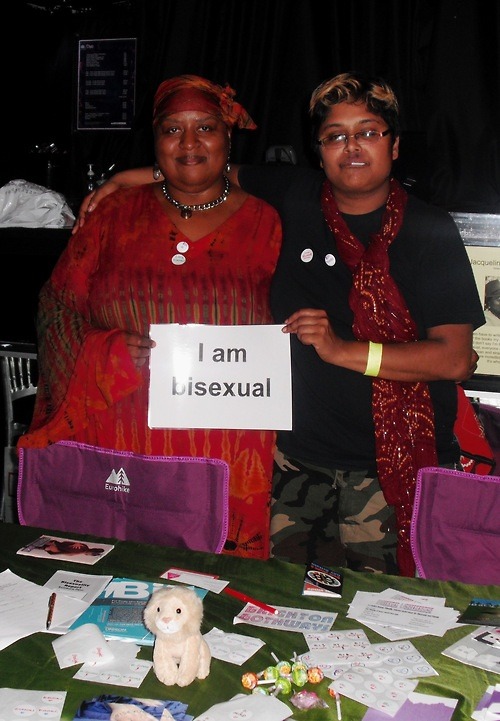
It is #bivisibilty week this week! Things have been happening all over the world to celebrate it. There have also been a slew of articles appearing this week on bisexuality, many of which feature bisexuals of colour.
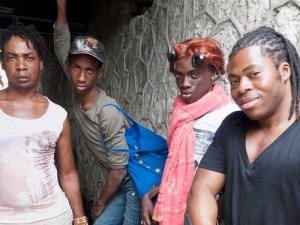
I don’t watch a lot of television. I find a lot of it frustrating and boring because it never reflects anyone remotely like me: black, fat and queer. But I tuned in to see the Unreported World’s short documentary on queer folks living in Jamaica. I lasted about five minutes before I had to switch off and have a cry.
The documentary was very moving; in one scene LGBT people had rocks thrown at them by crowds. When the police showed up, they said the LGBT folks were throwing stones at the crowd, completely reversing the truth. The next scene showed a government official telling a few queer folks that they can’t come to Jamaica and dress the way they did: “You’re not foreigners.” The last scene I watched after I tuned back in, showed a young person crying, saying that when he couldn’t bear any more, God would send an angel to him. I started crying again at that point.
I know that bigotry, homo/trans/biphobia exists all over the world. Jamaica isn’t the only place where queer people of colour live in fear. My home in England has laws to prevent discrimination, but I am still subject to physical, sexual and verbal threats and abuse on a regular basis because I’m black and bisexual. But what affected me so much about the programme, was that the hateful things that were done, were done to people who looked just like me. The nasty slurs were said with a Jamaican accent – the same accent I grew up with and was expected to emulate, even though I had never been to Jamaica. One particular slur, “b*tty boy” is something that still makes me scared because it was used often by the people around me growing up.
I’m glad the documentary aired, but I wish I’d been better prepared for how deeply it affected me. I was upset for the rest of the evening; I had flashbacks of the abusive people I grew up with, and all the horrible things they said and did. My heart went out to the LGBT folks who had to live in a sewer drain just to stay safe. After I was done crying, I remembered J-Flag (http://jflag.org) who support LGBTI people in Jamaica.
I know that I am fortunate that I can live as an openly out and proud black bisexual. I hope that one day, those in the documentary can do the same, and live in safety and freedom.


 Bi's of Colour